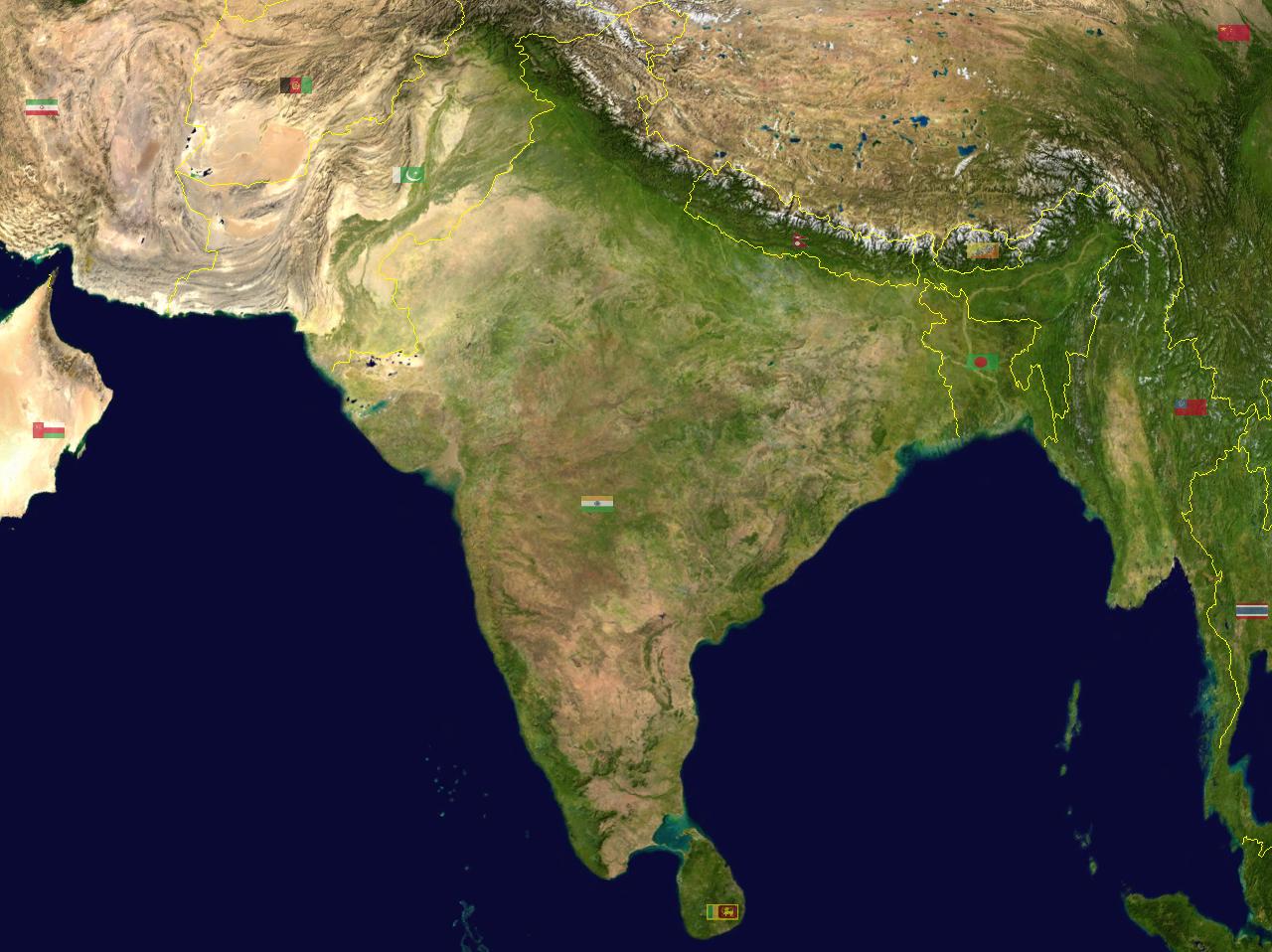
HISTORICAL PLACES IN INDIA
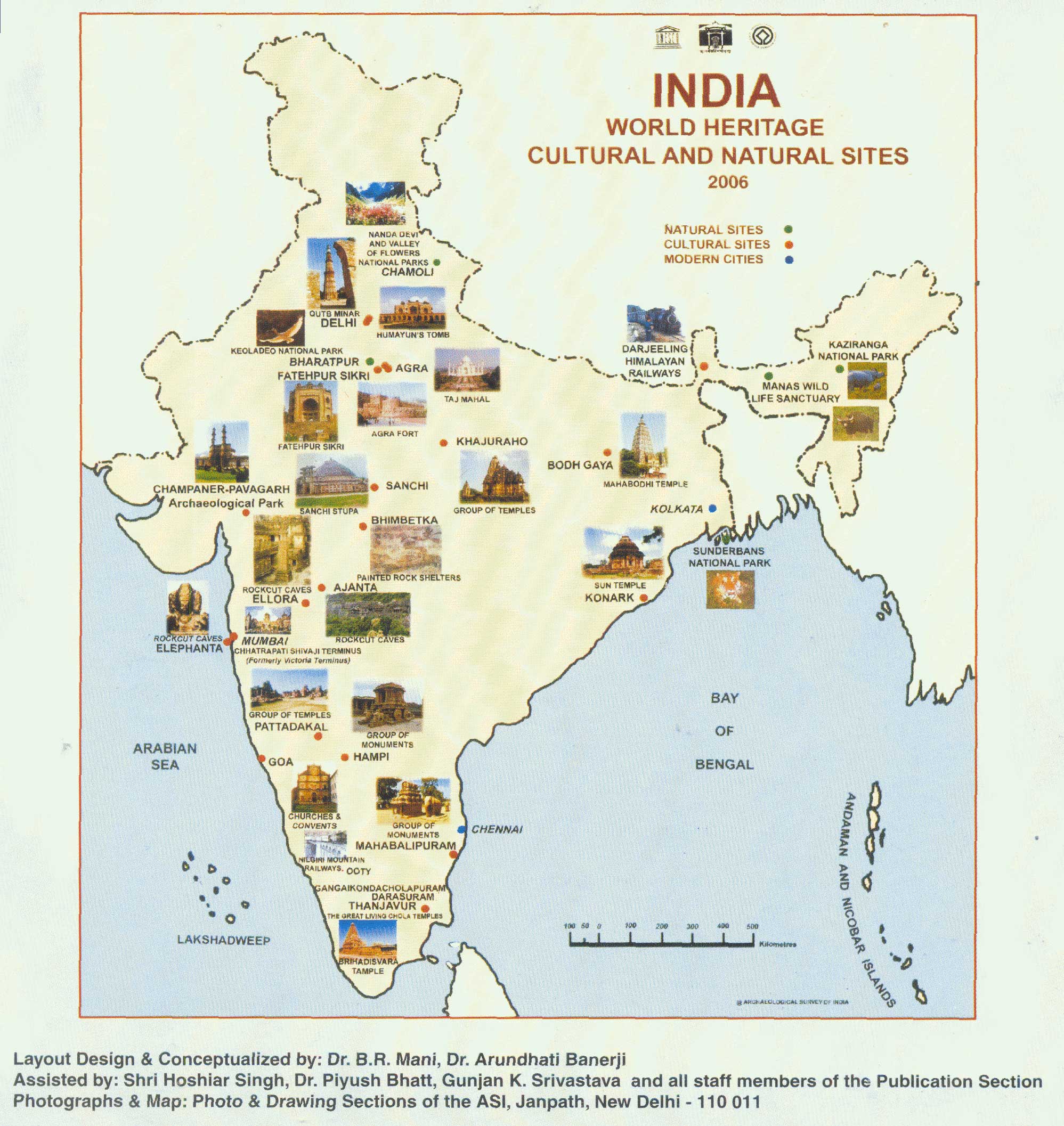
In 1972, the General Conference of UNESCO embraced a determination with overpowering excitement making consequently a 'Tradition concerning the security of the World Cultural and Natural Heritage'. The primary destinations of the tradition were to characterize the World Heritage in both social and characteristic viewpoints; to enroll Sites and Monuments from the part nations which are of extraordinary premium and widespread esteem, the security of which is the worry of all humankind; and to advance co-task among all Nations and individuals to contribute for the insurance of these all inclusive fortunes in place for who and what is to come.
The recorded locales on the World Heritage list now remains at 830 which incorporates both social and common destinations, .and gift that is shared by all humanity and the insurance of which is our primal concern: India is a dynamic part State on the World Heritage from 1977 and has been working in close co-activity with other International organizations like ICOMOS (International Council of Monuments and Sites), IUCN (International Union for the Conservation of Nature and Natural Resources) and ICCROM (International Center for the Study of safeguarding and Restoration of
Cultural Property).
Agra Fort, Agra (1983)

Agra Fort speaks to the main significant building venture of Akbar, with stays of just a couple of structures worked by him which now survive. Based on the site of a prior palace in AD 1565-1575, the post, aside from other vital units, contains Jahangiri Mahal, Khass Mahal, Diwan-I-Khass, Diwan-I-Am, Machchhi Bhawan and Moti Masjid. Numerous surviving structures were raised by Shah Jahan (AD 1630-1655). Of its four doors, the most amazing is the Delhi Gate on the west.
Ajanta Caves (1983)
 The world popular Ajanta Caves including the incomplete ones are thirty in number, of which five (9, 10, 19, 26 and 29) are chaitya-grihas and the rest are viharas (religious communities). Following quite a while of insensibility, these caverns were found in AD 1819. They fall into two particular stages with a break of almost four centuries between them. Every one of the hollows of the prior stage date between second century BC-AD. The caverns of the second stage were uncovered amid the matchless quality of the Vakatakas and Guptas.
A couple of compositions, which make due on the dividers of Caves 9 and 10date back to the second century BC-AD. The second gathering of the sketches began in about the fifth century AD and proceeded for the following two centuries as observable in later Caves. Hollows 1, 2, 16 and 17 have noteworthy canvases with subjects strongly religious in tone and base on Buddha, Bodhisattvas, occurrences from the life of Buddha and the jatakas. The sketches are executed on a ground of mud-mortar in the gum based paint procedure.
Ellora Caves (1983)

The magnificent group of rock-cut shrines of Ellora, representing three different faiths, Buddhist, Brahmanical and Jaina were excavated during the period from fifth to the thirteenth century AD. The Buddhist Caves (1 to 12) were excavated between the fifth and the seventh centuries AD, when the Mahayana sects were flourishing in the region. Important in this group are Caves 5, 10 and 12.
The Brahmanical Caves numbering 13 to 29 are mostly Saivite. Kailasa (Cave 16) is a remarkable example of rock-cut temples in India on account of its striking proportion, elaborate workmanship, architectural content and sculptural I ornamentation. There are two dhvaja-stambhas or pillars with flagstaff in the courtyard. The grand sculpture of Ravana attempting to lift mount Kailasa, the abode of Siva, with his full might is a landmark in Indian art.
The Jaina Caves (30 to 34) are massive, well-proportioned, decorated and mark the last phase of the activity at Ellora
Taj Mahal, Agra (1983)

Taj on the correct bank of River Yamuna, around 1.5km from the Agra stronghold, was worked to cherish the remaining parts of Arjumand Banu Begam entitled Mumtaj Mahal, the ruler of the Mughal sovereign Shah Jahan. lts development started in AD 1631 and finished seventeen years after the fact at a gigantic cost and work. The mind boggling carvings and decorate work in marble upgrade the excellence of Taj in which the sovereign was likewise covered by the side of his ruler after his demise. Dissimilar to other Mughal plant tombs, the catacomb is arranged at the northern end of a vast rectangular territory with its focal part separated into a square garden. The Taj is entered through a glorious passage in the focal point of the southern side where there is an extensive quadrangle. The landmark is thought to be an encapsulation of adoration and a standout amongst the most faultless compositional manifestations
of the world.
Khajuraho Group of Monuments (1986)

Khajuraho, the old Kharjjuravahaka, was the main seat of specialist of the Chandella rulers who decorated it with various tanks, scores of grandiose sanctuaries of sculptural elegance and engineering wonder. The nearby custom records eighty-five sanctuaries however now just twenty-five are standing cases in different phases of conservation. Be that as it may, for Chausath-Yogini, Brahma and Mahadeva which are of rock, the various sanctuaries are of fine grained sandstone, buff, pink or light yellow in shading. The Lakshmana sanctuary committed to Vishnu manufactured byYasovarman (AD 954), is a luxurious and advanced case.
The Visvanatha, Parsvanatha and Vaidyanatha sanctuaries have a place with the season of lord Dhanga, the successor of Yasovarman. The Jagadambi and Chitragupta are essential among the western gathering of sanctuaries. The biggest and most amazing sanctuary of Khajuraho is the godlike Kandariya Mahadeva which is ascribed to ruler Ganda (AD 1017-1029). Alternate cases that took after viz., Vamana, Adinatha, Javari, Chaturbhuj and Duladeo, are littler however intricately outlined. The Khajuraho gathering of sanctuaries are noted for grand patios (jagati) and practically viable plans. The figures of heavenly and semidivine being win all inclusive adoration for their sensitive demonstrating. Young female structures with their beguiling clothing and decorations additionally grasp the winsome effortlessness and appeal.
Qutb Complex, New Delhi (1993)

Qutb-Minar in red and buff sandstone is the highest tower in India. It has a diameter of 14.32m at the base and about 2.75m on the top with a height of 72.5m.
Qutbu'd-Din Aibak laid the foundation of Minar in AD 1199 for the use of the mu'azzin (crier) to give calls for prayer and raised the first storey, to which were added three more storeys by his successor and son-in-law, Shamsu'd-Din IItutmish (AD 1211-1236). All the storeys are surrounded by a projected balcony encircling the minar and supported by stone brackets, which are decorated with honey-comb design, more conspicuously in the first storey.
Numerous inscriptions in Arabic and Nagari characters in different places of the minar reveal the history of Qutb. According to the inscriptions on its surface it was repaired by Firuz Shah Tughlaq (AD 1351-1388) and Sikandar Lodi (AD 1489-1517).
Quwwat-ul-Islam Mosque, to the north-east of minar was built by Qutbu'd-Din Aibak in AD 1198. It is the earliest extant mosque built by the Delhi Sultans. It consists of a rectangular courtyard enclosed by cloisters, erected with the carved columns and architectural members of 27 Hindu and Jaina temples as recorded in the inscription on the main eastern entrance. Later, a lofty arched screen was erected and the mosque was enlarged by Shamsu'd-Din lItutmish and Alau'd-din ,Khalji. The Iron Pillar in the courtyard bears an inscription in Sanskrit in Brahmi script of fourth century AD, according to which the pillar was set up as a Vishnudhvaja (standard of god Vishnu) on the hill known as Vishnupada in memory of a mighty king named Chandra. A deep socket on the top of the ornate capital indicates that probably an image of Garuda was fixed into it.
The tomb of IItutmish was built in AD 1235. It is a plain square chamber of red sandstone, profusely carved with inscriptions, geometrical and arabesque patterns in Saracenic tradition on the entrances and the whole of interior.
Red Fort Complex, Delhi (2007)
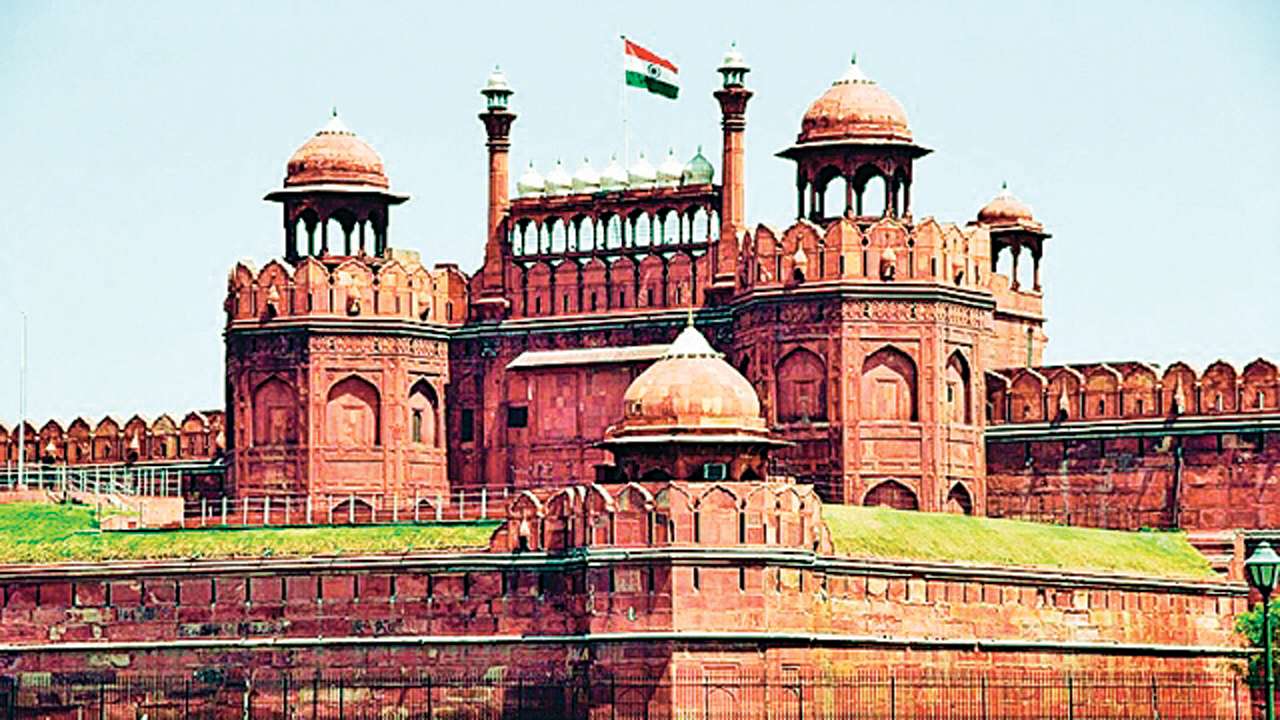
The Red Fort Complex was built as the palace fort of Shahjahanabad - the new capital of the 5th Mughal Emperor of India, Shahjahan (1628-58). It gets its name from its massive enclosing walls of red sandstone. It is adjacent to an older fort, the Salimgarh, built by Islam Shah Sur in 1546, with which it forms the Red Fort Complex. The private apartments consist of a row of pavilions connected by a continuous water channel, known as the Nahr-i-Behisht, or the Stream of Paradise. The palace was designed as an imitation of paradise as described in the Koran; a couplet inscribed in the palace reads, ‘If there be a paradise on earth, it is here, it is here'. The Red Fort is considered to represent the zenith of Mughal creativity which, under the Emperor Shahjahan, was brought to a new level of refinement. The planning of the palace is based on Islamic prototypes, but each pavilion reveals architectural elements typical of Mughal building, reflecting a fusion of Persian, Timurid and Hindu traditions The Red Fort's innovative planning and architectural style, including its garden design, strongly influenced later buildings and gardens in Rajasthan, Delhi, Agra and further afield. The monument's significance is further enhanced by the importance of events that happened. Through its fabric, the complex reflects all phases of Indian history from the Mughal period to independence.